Can You Take a Power Bank on a Plane? TSA Rules Explained
Imagine sitting at the airport gate, waiting for your boarding call, and you notice your phone battery is at 12%. You reach into your backpack for your trusty portable charger, but a sudden thought stops you: can you take a power bank on a plane?
The short and direct answer is yes, you can usually take a power bank on a plane, but it must go in your carry-on bag, not your checked luggage. Because power banks contain lithium-ion batteries, aviation authorities regulate them closely due to potential fire risks.
Whether you are booking flights to Miami for a sunny beach getaway or catching flights to New York for a business conference, knowing the rules keeps your travel smooth. This comprehensive guide breaks down the essential TSA power bank rules, battery size limits, and safe packing habits so you can fly without any security headaches.
Can You Take a Power Bank on a Plane?
When it comes to traveling with backup power, the location of your device matters immensely. Aviation security agencies are very specific about where these devices must live during your journey.
- Carry-on Luggage: Power banks are allowed in carry-on luggage. You can keep them in your backpack, purse, or rolling carry-on suitcase that stays with you in the cabin.
- Checked Luggage: Power banks are absolutely not allowed in checked luggage. If you leave a portable charger inside a bag that goes into the cargo hold, airport security will likely flag your bag, open it, and confiscate the charger.
Before you pack, check the watt-hour rating printed on your power bank so you know whether it meets airline rules. While most everyday chargers are completely fine, the final acceptance always depends on specific airline rules and the actual battery size.
Why Power Banks Are Not Allowed in Checked Luggage
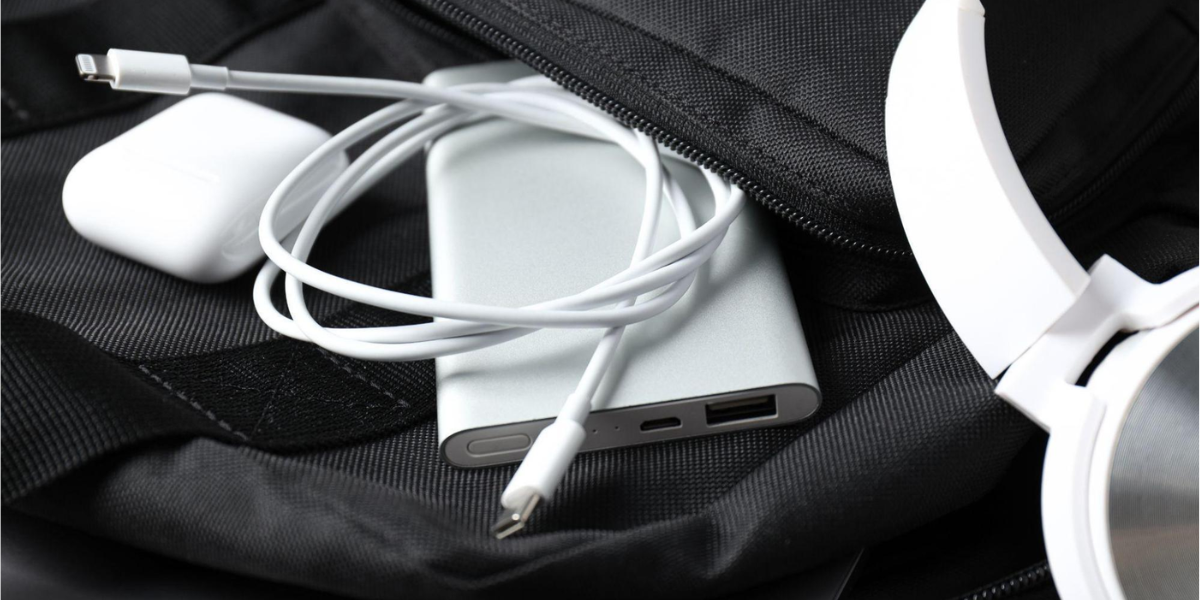
It might seem like an inconvenience to carry your portable electronics through the security line, but the ban on a power bank in checked luggage exists for an excellent safety reason.
Power banks rely on lithium-ion batteries to store high amounts of energy in a compact frame. While these batteries are highly efficient, they are sensitive to extreme heat, pressure, and physical damage. If a lithium battery experiences a short circuit or structural damage, it can undergo a process called thermal runaway, where it rapidly overheats and can catch fire.
If a battery safety issue happens in the passenger cabin, the cabin crew is trained to handle it immediately with fire extinguishers and containment bags. However, if a fire starts inside the cargo hold beneath the plane, it is much harder to detect and control quickly. Keeping portable chargers in the cabin ensures that any rare battery issues can be managed instantly.
TSA and FAA Rules for Power Banks
In the United States, the Transportation Security Administration (TSA) and the Federal Aviation Administration (FAA) set strict guidelines regarding lithium battery airline rules. These standards help keep flights safe while letting passengers stay connected on flights to Orlando or flights to Chicago.
The rules are organized by the capacity of the battery, which is measured in Watt-hours (Wh):
- Under 100Wh Capacity: This covers the vast majority of consumer power banks, smartphones, tablets, and laptops. These are usually allowed in your carry-on bag without needing any special permission from the airline.
- 101 to 160Wh Capacity: This range applies to large, heavy-duty power banks or professional video equipment batteries. You must get explicit airline approval before bringing these onboard, and they are strictly limited to two spare batteries per passenger.
- Over 160Wh Capacity: These ultra-high-capacity batteries are generally not allowed for regular passenger travel. They must be shipped as specialized cargo under strict hazardous materials guidelines.
No matter the size, the core power bank carry-on rules state that these devices must always stay in the cabin with you.
How to Check Your Power Bank Size
A common point of confusion for travelers is how battery capacity is displayed. While airline regulations focus on Watt-hours (Wh), most consumer manufacturing brands print the capacity in milliampere-hours (mAh).
To find out if your device complies with the 100Wh power bank plane limit, look closely at the fine print on the back or bottom of your charger. Most travel-safe power banks designed for smartphones are around 10,000mAh to 20,000mAh. A large 27,000mAh power bank is often very close to the 100Wh limit if it operates at a standard 3.7 Volts.
If your device only lists mAh and Volts, you can use this simple math formula to calculate the Watt-hours yourself:
Wh = (mAh × V) ÷ 1,000
Example Calculation: If you have a 20,000mAh power bank that operates at 3.7V, the calculation is:
-
Step 1: Multiply the mAh by the Volts: 20,000 × 3.7 = 74,000
-
Step 2: Divide the result by 1,000: 74,000 ÷ 1,000 = 74Wh
Because 74Wh is well under the 100Wh limit, this charger is perfectly fine to bring in your carry-on.
If the text on your power bank has worn off completely and you cannot read the capacity label, security officers may confiscate it because they cannot verify its safety.
Can You Use a Power Bank During the Flight?
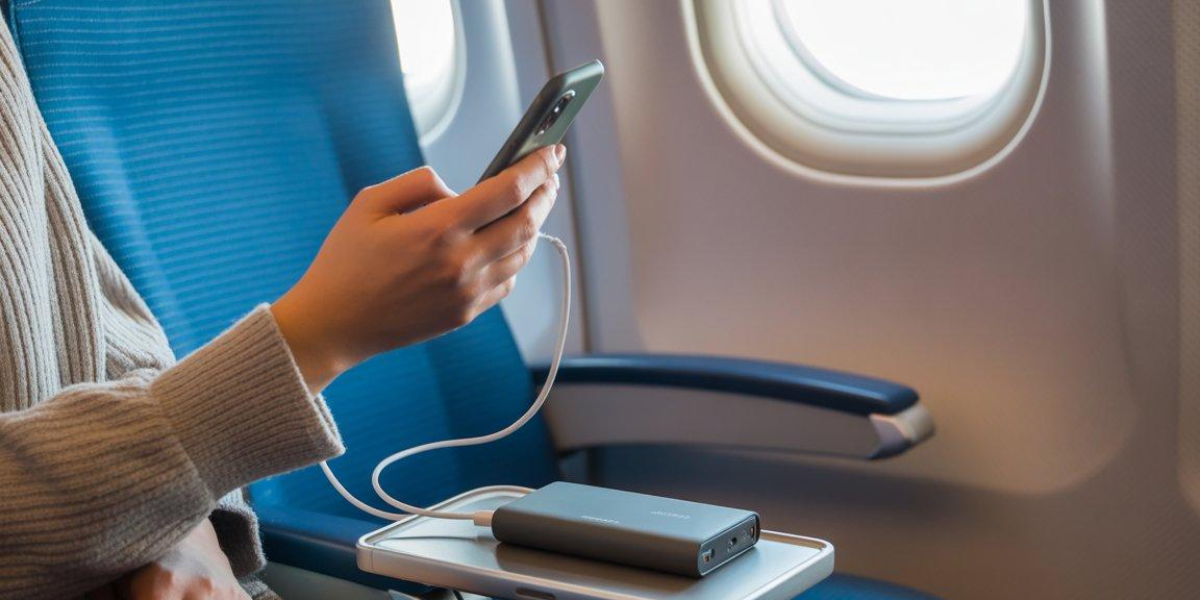
Once you are safely past security and boarding your flights to Las Vegas or flights to Florida, you might wonder: can you use a power bank on a plane?
The answer varies depending on the airline. Some airlines allow passengers to use portable chargers to top off their phones during the flight. However, other carriers might restrict power bank use or charging onboard, especially during taxi, takeoff, and landing.
Here are a few universal safety rules to follow:
- Always listen to the flight attendants and follow crew instructions immediately.
- Never charge a power bank that feels unusually hot, looks swollen, or shows physical damage.
- Do not leave your devices charging unattended while you sleep or walk to the restroom.
- If your power bank slips between the airplane seats, do not move the electronic seat mechanism, as crushing the battery can cause a fire. Instead, alert a crew member immediately.
Because airline policies vary slightly, it is always a smart habit to check with your specific carrier before your travel date.
How to Pack a Power Bank Safely
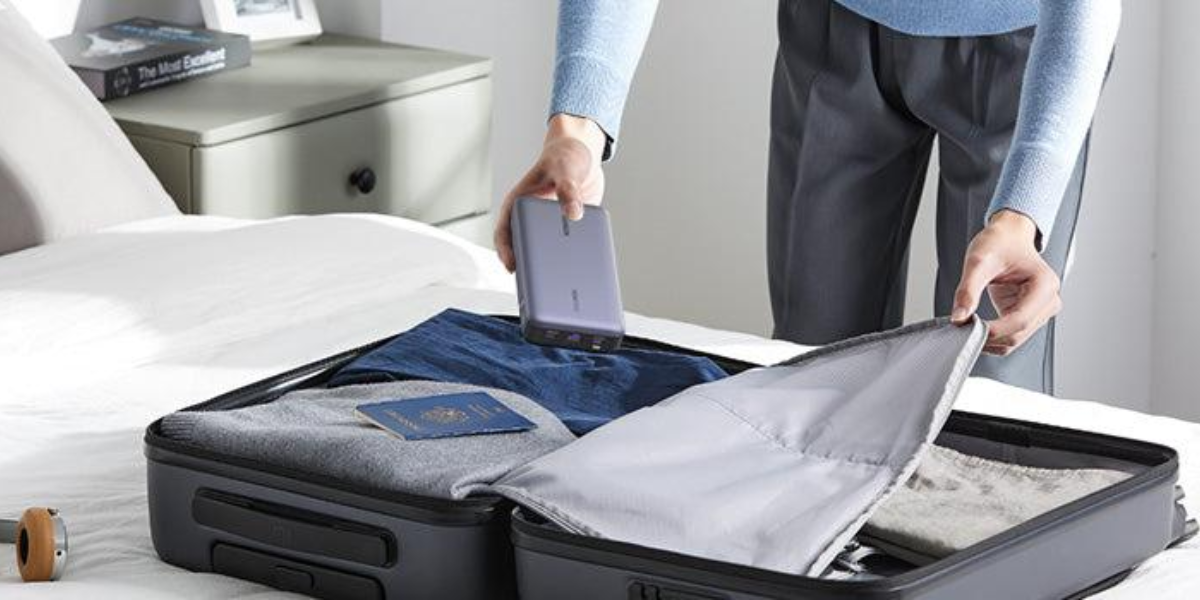
Safe packing is about more than just avoiding a TSA delay; it protects your electronic gear from damage. Use this practical travel checklist when preparing your bags for flights to Atlanta or flights to San Diego:
- Keep the portable charger inside your carry-on bag or personal item.
- Avoid placing the power bank loose in a pocket filled with metal objects like keys, coins, or paperclips, which can cause a short circuit.
- Cover the exposed charging ports with tape or keep the charger inside a small protective pouch.
- Keep the device accessible in your bag so you can easily pull it out for inspection if security staff asks to see it.
- Leave any damaged, bloated, or deeply scratched batteries at home.
- Keep the original manufacturer label clean and legible so officers can verify the Watt-hour numbers.
Pack your power bank where you can reach it easily, especially if security staff or airline crew ask to inspect it before you board.
What Happens If Your Power Bank Is Too Large?
If you arrive at the security checkpoint with a portable power supply that exceeds the legal limits, airport staff will take action to protect flight safety.
For example, if the device is rated over the standard limit, security will ask you to remove it from your luggage. If it falls into the 101 to 160Wh power bank airline approval category and you did not obtain permission from your airline ahead of time, you may be denied entry with the device. Any portable battery that exceeds 160Wh will be rejected entirely at the passenger terminal.
To prevent losing an expensive piece of gear, verify your equipment specs and contact your airline well before heading to the airport for flights to Denver or flights to Boston.
Domestic vs International Flight Rules
While this guide heavily references American standards like the TSA and FAA, travel power bank rules are highly consistent across the globe.
The International Air Transport Association (IATA) provides global dangerous goods guidance that most international airlines follow. Because of this, the 100Wh limit is a standard rule in Europe, Asia, and the Americas. However, some countries apply much stricter local enforcement. For instance, airport security in certain countries will strictly confiscate any power bank that does not have its capacity clearly printed on the outer casing by the manufacturer, regardless of how small it looks.
Rules can also change quickly after global safety incidents. Whether you are hopping on local flights to Houston or traveling across continents, staying updated on regional rules keeps you moving without delays.
Common Mistakes Travelers Make
Even experienced frequent flyers can make simple packing blunders. Avoid these common mistakes on your upcoming flights to Dallas or flights to Nashville:
- Packing power banks in checked luggage: This is the most frequent mistake and a major cause of baggage delays.
- Not checking the Wh rating beforehand: Assuming a massive laptop battery brick is fine can lead to an expensive loss at security.
- Bringing a charger with a worn-out label: If the TSA cannot read the text, they cannot verify the capacity.
- Carrying damaged batteries: Bulging or heavily dented power banks are severe safety hazards.
- Assuming all airlines have identical rules: Some low-cost carriers or international airlines have stricter quantity limits than standard FAA guidelines.
Quick Power Bank Travel Checklist
Before you head out the door for your flights to San Francisco, flights to Los Angeles, or flights to Fort Lauderdale, run through this quick checklist:
-
[ ] Is the battery capacity under 100Wh?
-
[ ] Is the power bank packed in your carry-on or personal item bag?
-
[ ] Is the factory label clear and easy to read?
-
[ ] Is the physical body of the charger completely undamaged?
-
[ ] Are the active ports protected from rubbing against loose metal objects?
Taking care of these details at home guarantees a stress-free experience when navigating security lines for flights to Phoenix, flights to Tampa, or flights to California. Remember to pack your essential medicine on plane documents and prescriptions in your carry-on as well, ensuring everything vital stays safely by your side throughout the journey.
Conclusion
To wrap things up, you can absolutely take a power bank on a plane, provided you carry it in your cabin luggage. Standard portable chargers under 100Wh are widely accepted by almost all major global airlines, while heavy-duty models between 101 and 160Wh require special approval from your airline before departure.
Before your next trip, check your power bank’s watt-hour rating, pack it in your carry-on, and confirm your airline’s rules to avoid problems at the airport.
Frequently Asked Questions
1. Can you take a power bank on a plane?
Yes. You can usually take a power bank on a plane, but it must be packed in your carry-on bag or personal item, never in your checked luggage.
2. Can I put a power bank in checked luggage?
No. Power banks are legally classified as spare lithium batteries. Under TSA rules, they are strictly prohibited from checked luggage due to the risk of overheating and fire in the cargo hold.
3. What size power bank is allowed on a plane?
Most power banks that are under 100Wh are fully allowed in carry-on luggage. Power banks that fall between 101 and 160Wh require special airline approval before you fly.
4. Is a 20,000mAh power bank allowed on a plane?
Usually, yes. A typical 20,000mAh power bank rated at a standard 3.7V equals roughly 74Wh, which sits comfortably below the maximum 100Wh limit.
5. Is a 30,000mAh power bank allowed on a plane?
It depends on the internal voltage and the total watt-hour rating. Many 30,000mAh power banks slightly exceed the 100Wh limit, so you must check the printed label and confirm guidelines with your airline.
6. Can I use my power bank during a flight?
Some airlines allow passengers to use portable chargers during the cruise portion of the flight, while others restrict their use entirely onboard. Always follow the specific rules given by your flight crew.
7. How many power banks can I bring on a plane?
For standard personal power banks under 100Wh, airlines generally allow a reasonable quantity for personal use. For larger batteries between 101 and 160Wh, the FAA limits passengers to a maximum of two spare units, subject to airline approval.


Comments
Post a Comment